Where is Humanity

When the Fridge Is Full but the World Is Hungry

Before I lay down for bed after a long day, I find myself planning Sunday dinner. What will I cook? It’s become my routine to prepare two meals—one for my son and something different for myself. Sometimes we order takeout. I don’t cook as much as I used to since Im now a widow.

I used to take joy in cooking for my husband. Now it feels more like a chore. Still, I keep the freezer and pantry full out of habit. I’ve always had a quiet fear of running out of food, so I overbuy. We went from a family of six to just two, yet my shopping habits haven’t changed.

Then my thoughts drift—like they often do—to the state of the world. Another crisis, another blow to families already stretched thin. SNAP benefits are reportedly on hold for November 2025. That once “magical” EBT card, the one that could buy bread and milk, is now just a piece of plastic—powerless to feed the many who depend on it.

No, this doesn’t directly affect me. But emotionally, it does. I can’t stop thinking about the children who will go to bed hungry, about mothers forced to choose between paying rent or buying groceries. I imagine people standing in long lines at food banks, only to discover there’s little left when they finally reach the front.

I’ve seen the harsh comments online: “Get a job.” “They shouldn’t have kids if they can’t afford them.” Words that sting because they reveal how divided we’ve become.

But here’s what many don’t realize: SNAP benefits don’t simply reflect economic need—they reflect inequality. Households headed by women—disabled, unemployed, low wage earners, older women, and caregivers—are more likely to need this assistance because of historic and structural gaps in wages and support.

In fiscal year 2023, about 39% of all SNAP participants were children, 42% were adults between 18 and 59, and 19% were age 60 or older.

Looking at race and ethnicity, roughly 35% of participants identified as White (non-Hispanic), 26% as Black/African American, 16% as Hispanic/Latino, 4% as Asian, and 1% as Native American—with about 17% not reporting race.

That means many of the people we might reflexively think of as “other” are in fact part of the broader American family of struggle. And when SNAP is disrupted, those interconnecting layers of disadvantage—age, gender, race, and working-poor status—feel the impact most keenly.

And then comes the domino effect. When one mother can’t pay rent because she had to buy food, her landlord may fall behind on the mortgage. Stores lose revenue, raise prices to compensate, and the cycle deepens. Federal workers miss paychecks, some receiving only partial wages. Yet, somewhere, a new president is building a ballroom in the White House—while millions wonder how to keep food on the table and heat in their homes.

I keep thinking, what if? Because so much of what we once took for granted feels uncertain now.
From Bully to President

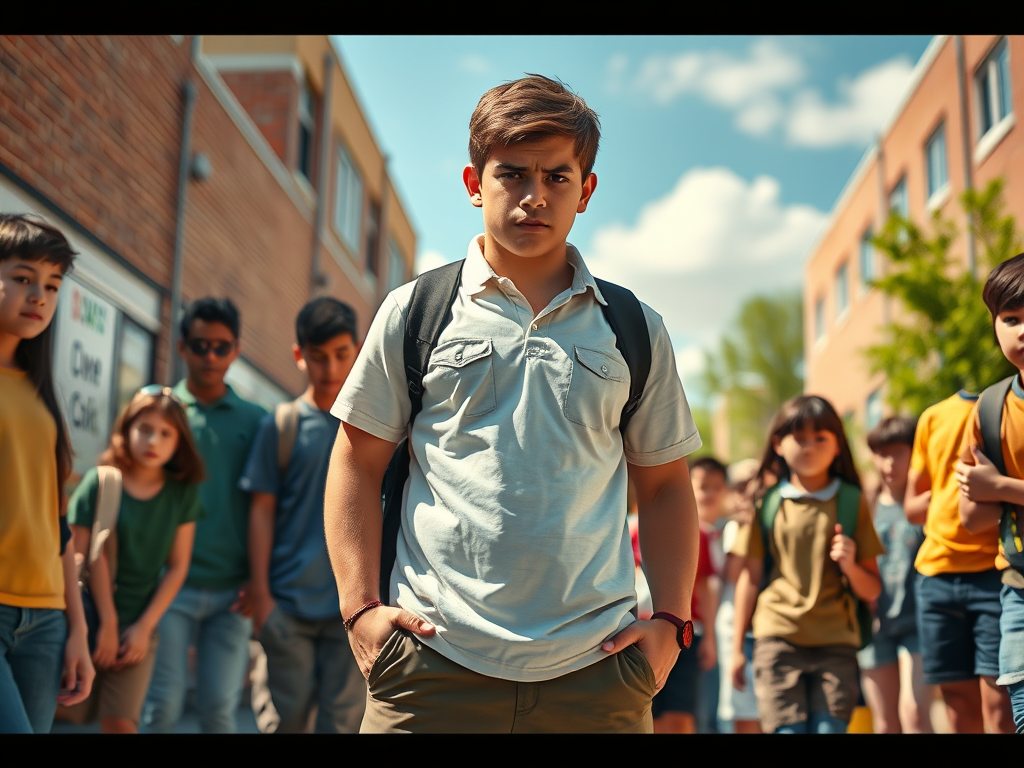
I used to ditch school often in the seventh grade. I was truant from many of my classes–not because I didn’t want to learn, but because I was afraid. I would show up to school and then hide: in the bathroom stall or some hidden corner of the schoolyard, hoping not to be noticed. When the truant officer finally contacted my mother, there was hell to pay. But the real punishment wasn’t at home–it was at school, where Sharon, the school bully, made my life a daily nightmare.

Fear stayed close, like a shadow I couldn’t shake. I’d lock myself in a bathroom stall, praying I wouldn’t run into her. I’d stay there fifteen, twenty minutes after the bell rang, waiting for the coast to clear. Then I’d slip out quietly and head for the school gates. Sometimes I got lucky–maybe she was gone, or busy tormenting someone else–but eventually, our paths would cross.

I never understood what I had done to deserve her cruelty. She took my lunch money, emptied my book bag, yanked my long braids, and sometimes even spit on me. She called me names so ugly I still remember how they stung. She even insulted my mother–a woman she had never met. Sharon always had a group of kids with her. I don’t believe they truly liked her; they followed her out of fear. Some would laugh nervously at her jokes, hoping she wouldn’t turn on them next. Her power came from our fear. We gave it to her without meaning to.

Later in life, I realized Sharon was a coward. Her strength didn’t come from within–it came from her enablers. I ran into her in high school after she had dropped out. She didn’t say a word. She wouldn’t even look me in the eye. By then, I had found my voice–and I was ready.

I hadn’t thought about Sharon in years–until I saw Donald Trump rise to power. Watching him insult,

humiliate, and mock anyone who disagreed with him brought all those buried memories flooding back. The helplessness. The shame. The way his followers laughed and clapped as he belittled others. It was Sharon all over again, only now the stage was national, and the stakes far higher.

Trump insulted women, targeted immigrants, mocked the disabled, and used Twitter as a weapon. His cruelty wasn’t confined to back hallways or cafeteria tables–his bullying was broadcast across the world. And just like Sharon, he fed off fear. He ruled with intimidation, not integrity. With ego, not empathy.

Many of the people who voted for him now feel regret but stay silent. They fear the backlash. They fear being targeted next. Trump has taught them that dissent will be punished. He doesn’t lead with unity or vision. He leads with vengeance. And still, he gains strength from those who follow him anyway.

Now he threatens our very democracy. What frightens me most is that I believe he truly thinks he’s the only one who can fix America. He flirts openly with authoritarianism–undermining institutions, dismissing the Constitution, and acting as though laws don’t apply to him. He spreads lies with conviction, as if truth itself is an inconvenience.

Isn’t this the behavior of someone who wishes to be a dictator?

We must not remain silent. Because when bullies are left unchecked, they don’t disappear–they grow louder, more dangerous, and more powerful. Whether in a schoolyard or a seat of government, bullying must be called what it is: a weapon of fear. And we, the people, must remember–we hold the power to say no.